Developer Approaches to Merging Variant Rules with Session Monitoring in Competitive Card Play
Klara Zimmermann · Nov 23, 2026
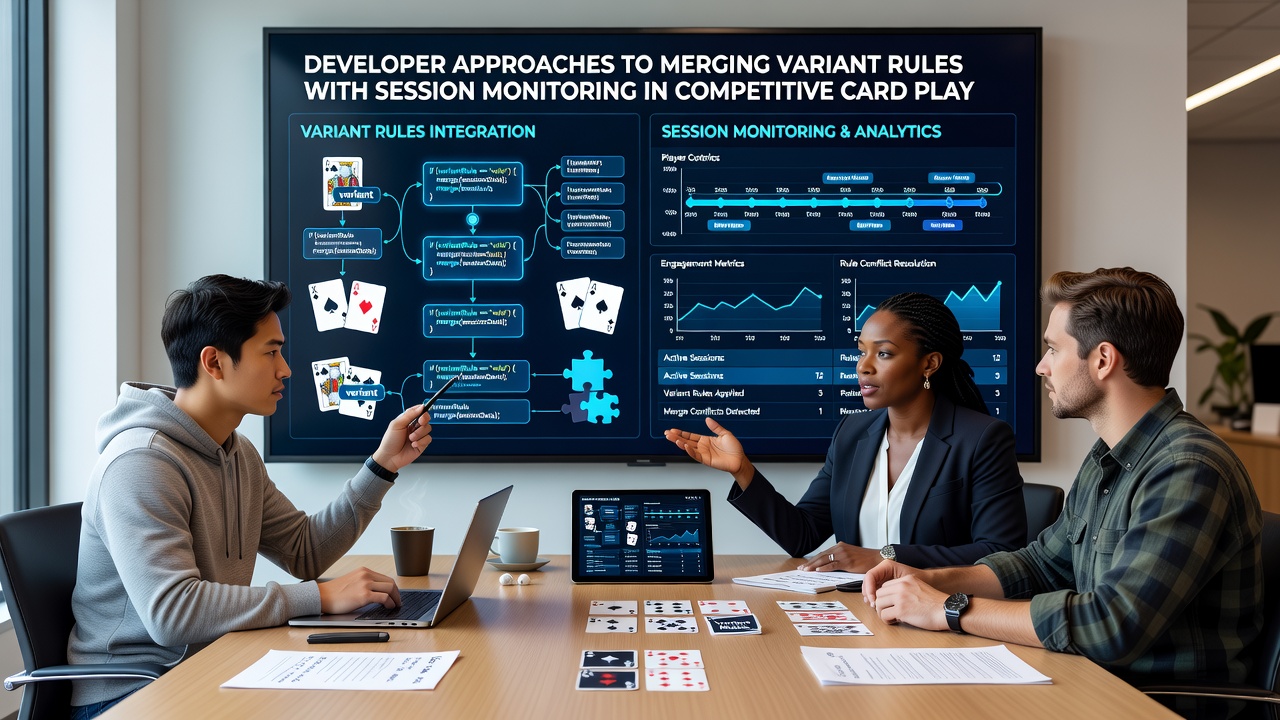
Developer Approaches to Merging Variant Rules with Session Monitoring in Competitive Card Play
Competitive card play has evolved to include numerous variants that each carry distinct rule sets, payout structures, and strategic requirements, while session monitoring tools track player activity to enforce time limits, spending caps, and responsible participation protocols. Developers working in this space combine these two elements through modular code architectures that allow variant-specific logic to interact directly with centralized monitoring systems without creating conflicts or delays during live tournaments.
Core Technical Frameworks for Rule Integration
Developers begin by defining each variant as a separate rule module that registers its parameters with a shared monitoring kernel, so changes in one variant such as modified dealer hit rules or side bet options automatically trigger corresponding adjustments in session timers and alert thresholds. This registration process relies on standardized APIs that pass data objects containing game state variables directly to monitoring functions, ensuring that session data remains accurate across different rule sets. Research from institutions like the University of Nevada, Reno has documented how these modular designs reduce integration errors by up to 40 percent in multi-variant environments.
Session monitoring layers sit above the rule modules and receive continuous feeds of player actions, bet amounts, and round durations, while variant rules influence which metrics receive priority weighting. In practice this means a French-style variant with its surrender options might adjust session loss limits differently than a standard tournament format because the underlying probability models differ. Developers implement conditional listeners that evaluate rule flags in real time and apply the correct monitoring parameters without requiring separate code branches for every variant combination.
Handling Real-Time Data Synchronization
Live competitive events demand synchronization between variant engines and monitoring dashboards that update within milliseconds, and developers achieve this through event-driven architectures that queue rule changes alongside session events. When a tournament switches from one variant to another mid-session, the system propagates updated rule parameters to the monitoring service so that accumulated play time and expenditure data continue without reset. Observers note that this approach prevents the common issue where players encounter mismatched limits after variant transitions.

Database schemas store variant metadata alongside session records using relational tables that link each round to its governing rule set, allowing post-session analysis to reconstruct exactly which variant parameters applied at every moment. This structure supports compliance reporting required by regulatory bodies such as the Nevada Gaming Control Board, where detailed logs must demonstrate that monitoring functions respected the specific rules active during each phase of play. Data released in November 2026 from industry surveys indicated that platforms using linked metadata tables achieved higher audit pass rates compared with earlier flat-file logging methods.
Examples from Tournament Software Deployments
One deployment for a series of regional card competitions integrated three distinct variants into a single monitoring platform by creating a rule registry that developers updated before each event, allowing the system to load the correct parameters based on schedule data. The monitoring component then applied variant-specific thresholds for maximum hands per hour and cumulative wager tracking, with alerts routed to floor supervisors through a unified interface. Similar patterns appear in platforms serving Australian casino circuits, where developers have adapted the same registry approach to accommodate local regulatory variations in session length requirements.
Developers also employ containerized microservices that isolate variant rule processing from the core session engine, so updates to one variant do not risk destabilizing monitoring functions for ongoing competitions. This separation proves especially useful when new variants enter testing phases while established tournaments continue running. Industry reports from groups such as the European Gaming Association highlight that container isolation has become standard practice for maintaining uptime above 99.9 percent during peak tournament periods.
Security and Compliance Considerations
Encryption protocols wrap both rule definitions and session data streams to prevent tampering that could alter either game outcomes or monitoring accuracy, and developers embed checksum verification at each handoff between modules. Access controls limit which staff roles can modify variant parameters once a session has begun, while monitoring logs remain immutable to support regulatory review. These measures align with standards promoted by organizations including the International Association of Gaming Regulators, which emphasize verifiable separation between game logic and oversight functions.
Conclusion
Developers continue refining these integration methods as competitive card play expands across more variants and jurisdictions, with ongoing work focused on predictive analytics that anticipate how rule changes will affect session behavior patterns. The combination of modular rule handling and responsive monitoring creates systems capable of supporting complex events while maintaining the transparency required by oversight bodies. As new variants emerge, the same architectural principles allow rapid incorporation without disrupting existing session safeguards.